
Waterproofing selection begins by understanding where the water comes from, how it reaches the structure and what the protected element must endure. The system should follow the structure and exposure—not the other way around.
Questions to establish first
- Is the exposure rainwater, groundwater, continuous moisture or an active leak?
- What hydrostatic pressure and structural movement must the system accommodate?
- Is the work on a roof, foundation, basement, tank, wet area or concrete structure?
- What defects, cracks, joints or damaged concrete need repair first?
- How will membrane continuity, seams, adhesion and watertightness be inspected?
Diagnose before specifying
Waterproofing protects buildings and concrete structures against water penetration, moisture intrusion and environmental damage. A well-selected system can prevent leaks, protect reinforcement from corrosion, reduce moisture-driven deterioration and limit future repair needs.
The selection depends on structure type, water exposure, hydrostatic pressure, soil conditions, structural movement, environmental exposure, concrete condition and required service life. For existing buildings, the defects and water path should be identified before rehabilitation begins.
Identify rainwater, groundwater, continuous moisture or the origin of active ingress.
Trace cracks, joints, defects and interfaces that allow water to move through the structure.
Review pressure, movement, weather, substrate condition and the protected element's use.
Sheet and liquid-applied systems serve different conditions
Bituminous membranes provide continuous sheet protection for roofs and below-grade elements such as basements, foundations, podium decks, retaining walls and underground structures. PVC and TPO membranes use heat-welded seams and suit broad industrial and commercial roof areas.
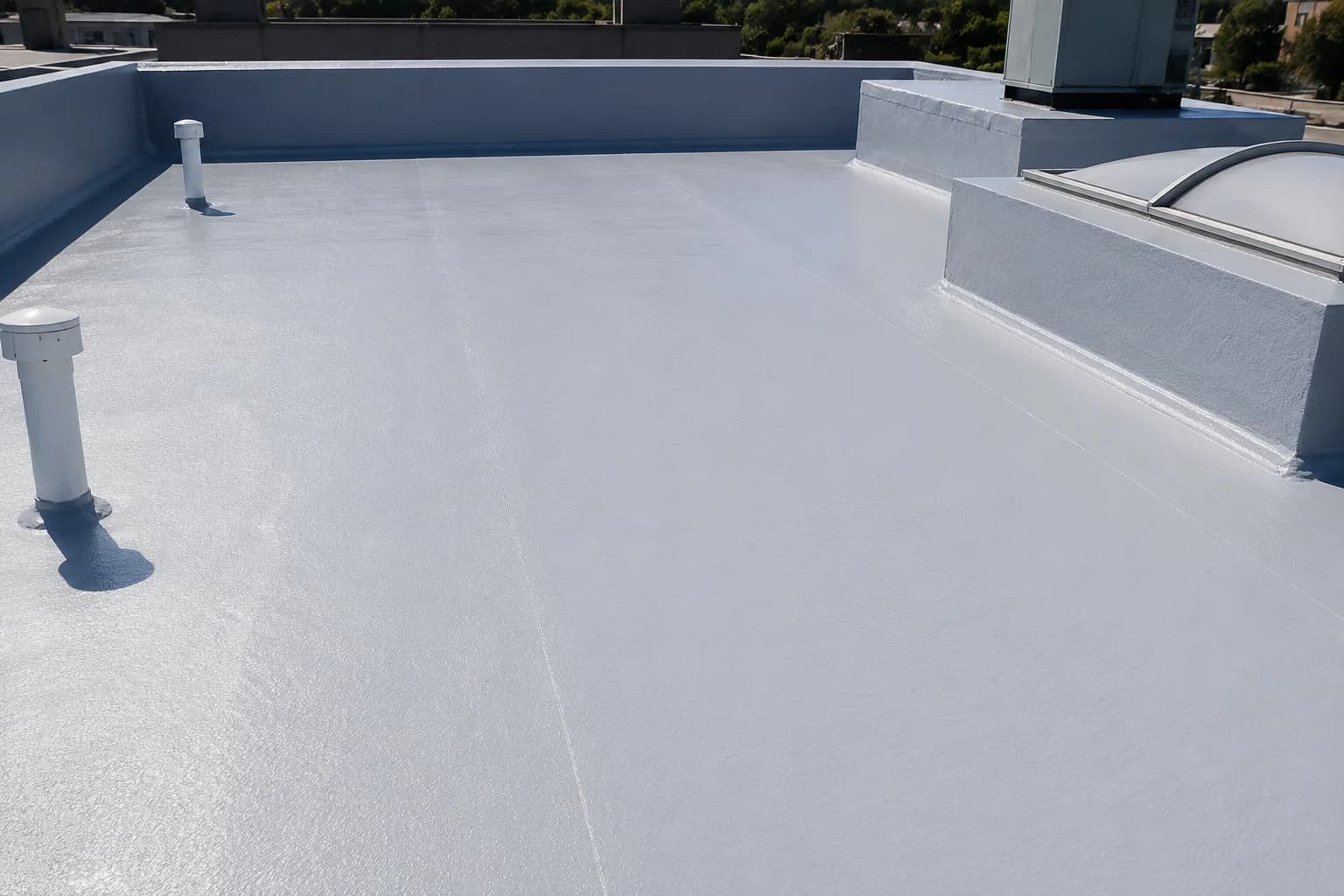
Polyurethane waterproofing forms a seamless elastic, liquid-applied membrane. It is suited to roofs, balconies, terraces, wet areas and exposed surfaces with complex geometry where continuity around details is important.
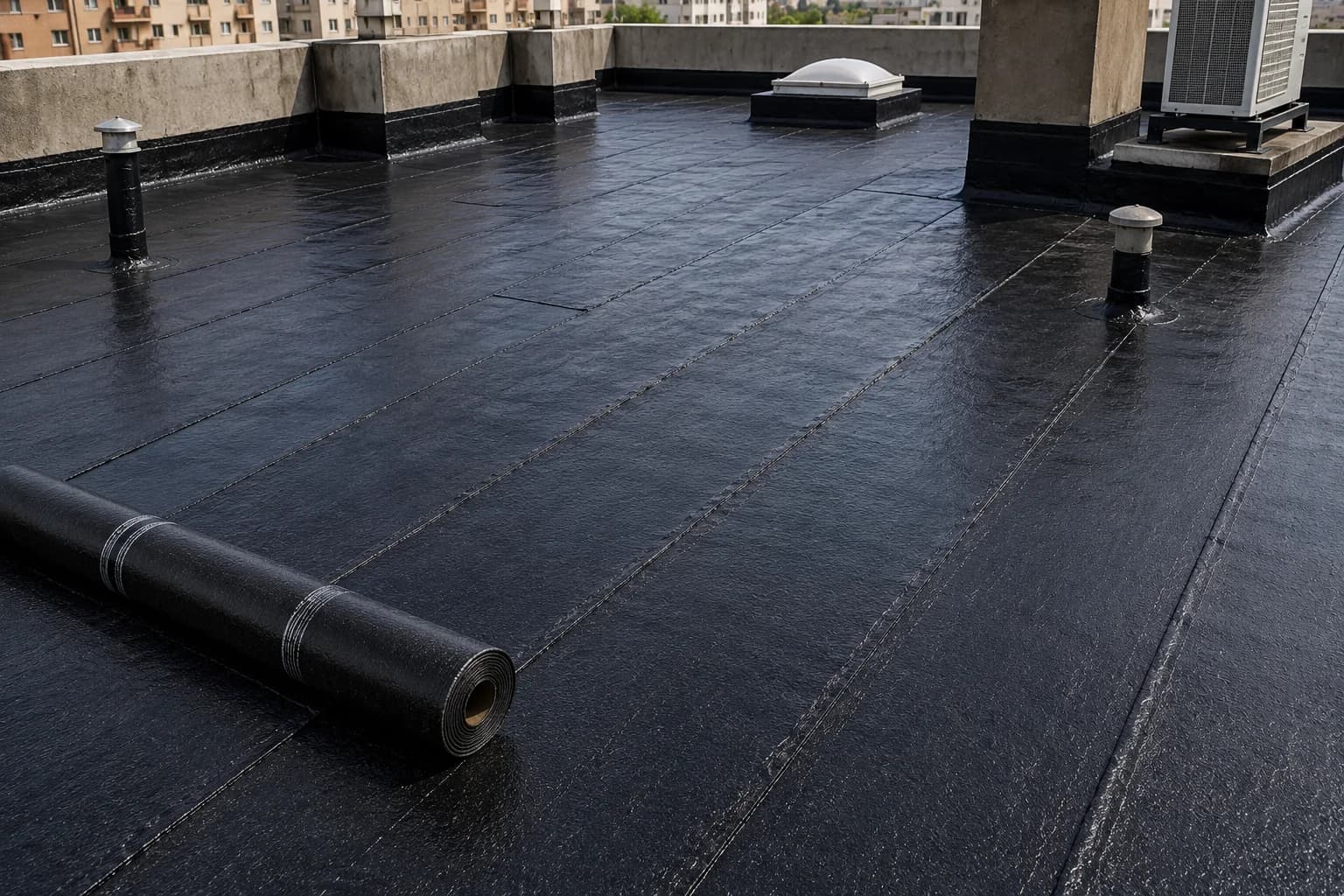
The system format should follow the substrate, geometry, exposure and method needed to achieve continuous coverage.
Concrete-compatible and integral protection
Cementitious waterproofing is a cement-based approach for concrete surfaces and can address positive or negative water pressure. Typical applications include water tanks, bathrooms, pools and basements.
Crystalline waterproofing uses penetrating technology that forms insoluble crystals within the concrete to block water pathways. It is applied to concrete structures, basements and water-retaining structures where protection is integrated with the concrete.
Concrete-compatible protection for tanks, wet areas, pools and basements.
Penetrating action designed to block pathways within concrete.
Active leaks require targeted repair
Injection waterproofing uses polyurethane or epoxy resin to treat diagnosed leaks and water pathways in concrete. It can target active leaks, structural cracks, joints and underground repairs after the source and route of ingress have been understood.
The visible wet area is not always the complete diagnosis. The leak source, crack or joint condition and surrounding concrete all need to be assessed so treatment is directed at the pathway rather than only the symptom.
Many active leaks can be treated with injection systems after the source and water pathway are diagnosed.
Prepare, install and verify continuity
Installation begins with a site assessment of the structure, exposure, leakage and concrete condition. Dust, loose particles, oils, old coatings and contamination are removed; cracks, honeycombs, joints, defects and damaged concrete are repaired before waterproofing.
Where the system requires it, primer improves adhesion. The chosen waterproofing is then applied continuously using its specified installation method. Inspection should verify coverage, membrane integrity, adhesion, seams and watertightness.
Clean the surface and repair defects, cracks, joints and damaged concrete.
Install the specified membrane or treatment as one continuous system.
Inspect coverage, integrity, adhesion, seams and water tightness before handover.