
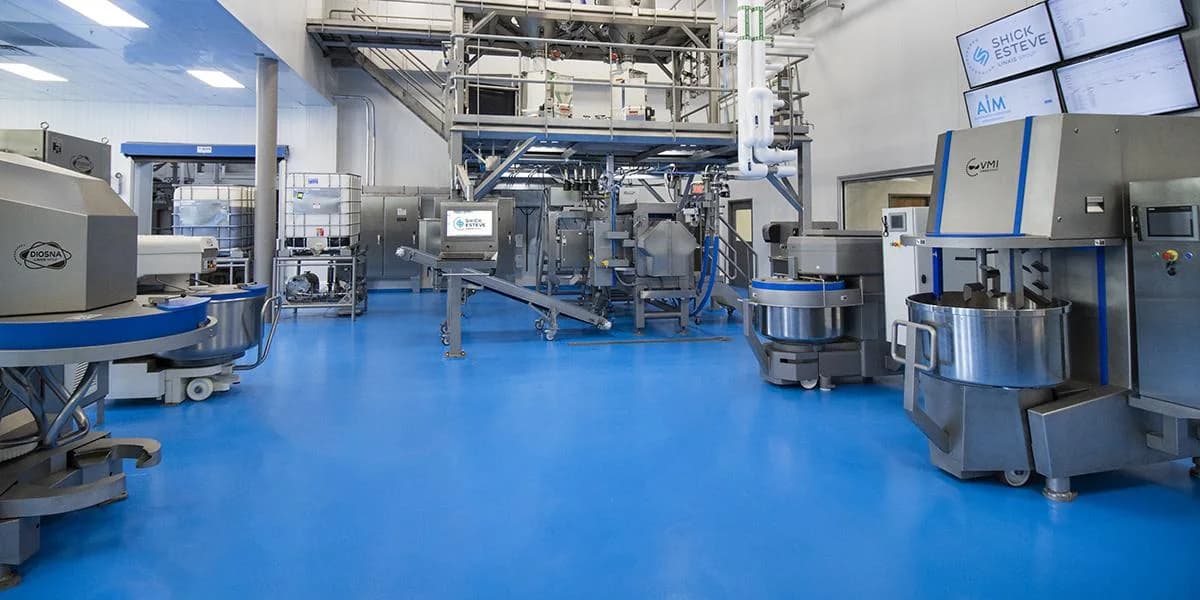
The right industrial floor begins with the operation, not a product name. Concrete condition, mechanical loads, traffic, cleaning routines and exposure all shape the system and build-up that should be specified.
Questions to establish first
- What temperatures and rapid temperature changes will the floor experience?
- Which chemicals, oils, cleaners or process liquids can reach the surface?
- How heavy and continuous are the traffic, machinery and impact loads?
- What hygiene, cleaning and slip-resistance requirements govern the area?
- Is the existing concrete sound, dry enough and suitable for preparation?
Begin with the operating exposure
An industrial floor is part of the facility's operating system. Before selecting a resin, review the concrete strength and moisture, the intensity of traffic, the mechanical loads, chemical exposure, hygiene standards, safety requirements and the thickness available for the build-up.
Cleaning is part of that assessment. Hot-water washdowns, steam, industrial cleaners and frequent wet processing can place very different demands on a floor than dry warehouse traffic. The specification should reflect the most demanding routine condition, not only the appearance required at handover.
Check strength, moisture, hardness, cracks, joints and floor levels before choosing the build-up.
Map forklifts, machinery, pallets, impacts and continuous production traffic.
Identify chemicals, temperature, cleaning methods, water and the required slip profile.
Where epoxy flooring fits
Epoxy is a high-performance resin system that bonds chemically to properly prepared concrete, creating a seamless and durable protective surface. It can support demanding traffic, chemical exposure, hygiene requirements and continuous operation when the correct system is selected.
The epoxy family covers different duties. A thinner floor coating offers practical protection for general industrial and commercial spaces. Self-leveling epoxy creates a smooth, non-porous finish for areas with demanding hygiene and cleaning requirements. Heavy-duty epoxy mortar combines resin with graded aggregates for severe mechanical exposure. Anti-static, decorative and specialized chemical-resistant options address more specific operating needs.
A smooth 2–4 mm build-up for hygienic facilities, laboratories and cleanrooms.
A practical 300–800 micron protective layer for warehouses, workshops and utility spaces.
A 4–9 mm resin mortar for production floors, loading areas and severe loads.
When polyurethane concrete becomes the stronger choice
Ucrete is a polyurethane concrete floor developed for industrial environments subject to extreme temperatures, aggressive chemicals and demanding mechanical exposure. Its dense, seamless and non-porous finish also supports hygiene, impact resistance, abrasion resistance and continuous traffic.
It is generally preferred when steam, high temperatures, thermal shock or aggressive chemicals exceed normal epoxy operating conditions. Correct system and thickness selection can support hot-water washdowns, steam cleaning, freezer conditions and rapid temperature changes. Smooth, textured and severe thermal-shock build-ups allow the surface to be aligned with the facility's safety and processing needs.
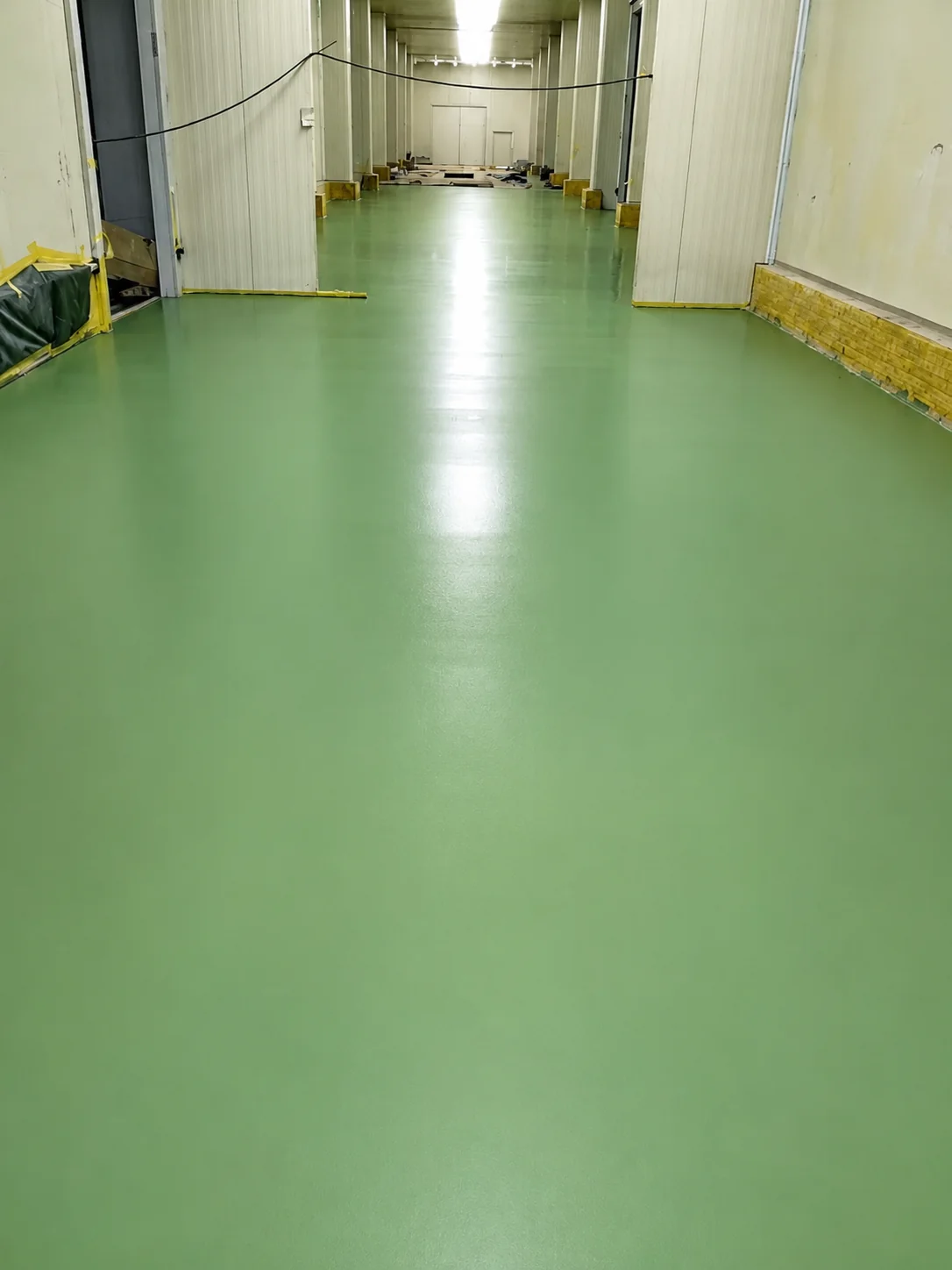
Ucrete build-ups commonly range from 4 to 12 mm; operating temperature, load, chemicals and cleaning determine the final selection.
Use a performance-led decision framework
Both families can create seamless industrial surfaces, resist chemicals and support heavy traffic. The deciding factor is the complete exposure profile. Epoxy offers a broad range from economical coatings to smooth hygienic and heavy-duty mortar systems. Polyurethane concrete is the more relevant family when severe thermal change, steam cleaning, freezing conditions or particularly aggressive operating exposure becomes central to the brief.
Finish is another decision. Smooth systems support straightforward cleaning; textured options improve slip resistance in wet processing and wash areas. The selected surface should balance hygiene, cleaning and worker safety rather than treating any one of them in isolation.
Match the resin family, thickness and finish to real traffic, temperature and chemical exposure.
Account for hygiene procedures, wet areas, washdowns and the required level of slip resistance.
A sound, tested and mechanically prepared concrete base is essential for either family.
Specification is only half the result
Site inspection and concrete evaluation should come before installation. Weak concrete, laitance, contamination and old coatings are mechanically removed; cracks, joints, edges, level differences and damaged areas are repaired. The specified primer and floor build-up can then be installed to the engineered thickness.
Quality checks should confirm the finish, thickness, adhesion and compliance with the chosen specification. For textured systems, the slip profile is also part of that review. This sequence connects the material choice to the actual concrete and operating conditions found on site.
A product comparison cannot replace concrete testing, surface preparation and project-specific system selection.